Collingwood Lock ExpertsService bulletin 3 of 3
High Security Locks: inside the visit
Most break-ins do not involve picking; they involve a boot, a pry bar or a key that should never have been copied.
Collingwood, Ontario · Locksmith · open 24/7
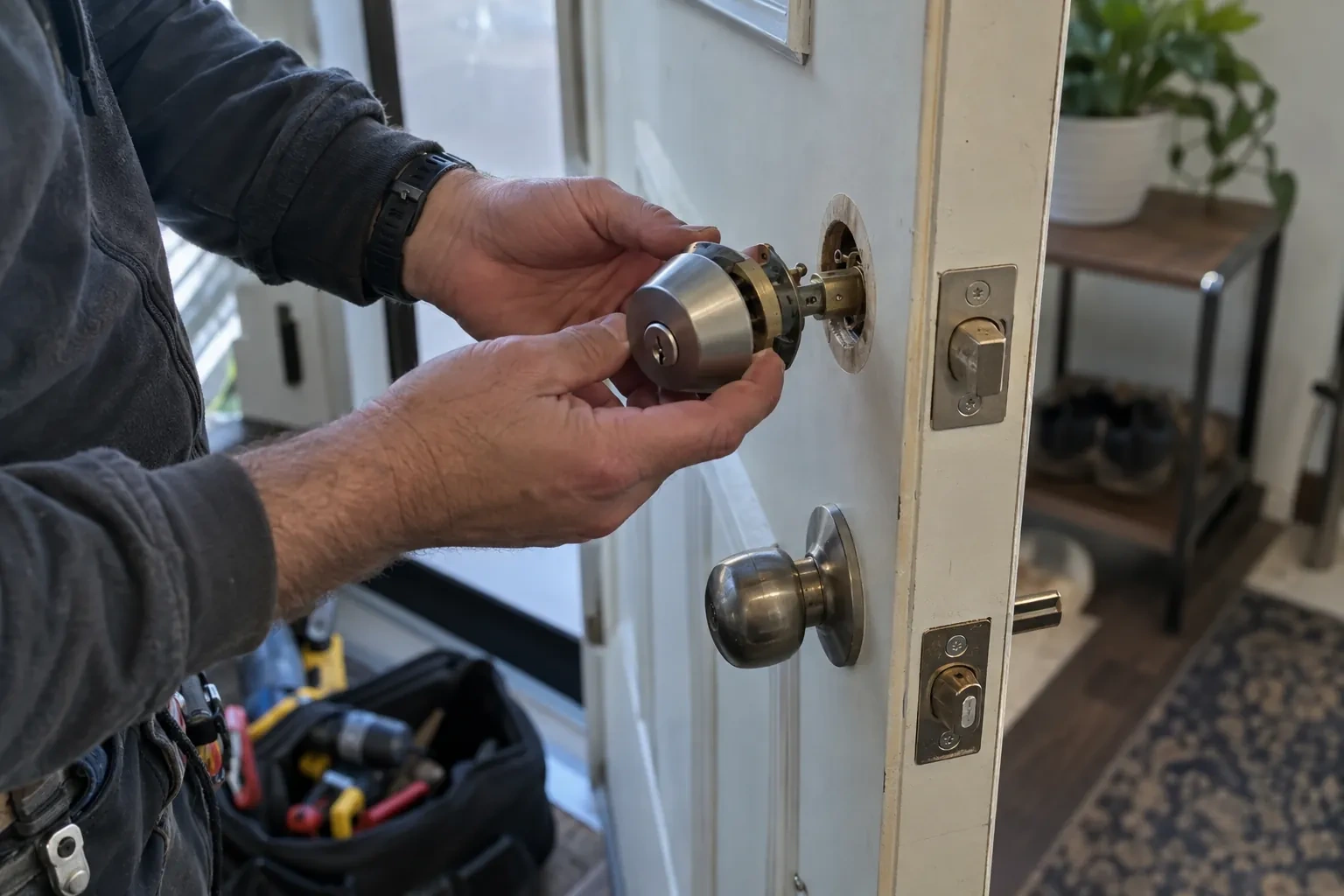
Most break-ins do not involve picking; they involve a boot, a pry bar or a key that should never have been copied. High security hardware answers all three. A deadbolt with a full one-inch throw and a hardened core resists sawing and kicking, a reinforced strike with three-inch screws keeps the jamb whole, and a patented keyway means a copy can only be made through the locksmith who holds your system. The pick, bump and drill resistance of the cylinder is the layer on top. The locksmith's job is to fit those layers to your particular door and your particular worries.
Matching the rating to the risk
Ratings are only useful if someone explains them. A residential deadbolt carries a hardware grade for security, durability and finish based on hammer blows, pulling force and cycle testing. A high-security cylinder carries a separate laboratory listing based on how many minutes it resists picking, drilling and forcing. The locksmith explains what each figure means in practice for your door and points out the rule that matters most: the whole assembly takes the grade of its weakest part. That conversation ends with a recommendation you understand rather than a part number you have to trust.
Heavy hardware for commercial doors
Storefront, warehouse and office doors take heavy-duty lock bodies rather than residential deadbolts. Depending on the door, that means a commercial deadbolt or mortise lock with a hardened cylinder guard, a free-spinning collar that defeats wrenches, and a laboratory-rated cylinder inside it. Narrow aluminium doors get a deadlock made for their stile. The locksmith fits the lock to the existing preparation where it is standard, adjusts the strike in the frame, and confirms that any exit device or closer on the same door still works exactly as before so people leave easily while the door holds from outside.
Watching the patent calendar
Patented keyways protect you for as long as the patent lasts. When it expires, blanks may be sold openly and the copy-control layer weakens, though the mechanical resistance of the cylinder stays. The locksmith notes the patent term of your system at handover so the date is not a surprise. Many years before it arrives, the same hardware can usually be moved to a newer patented keyway by changing cylinders and keys while the lock bodies stay. Treat it like a roof: nothing needs doing for a long while, but the date is written down.