Emergency Car keys · Collingwood
Car Lockout Service
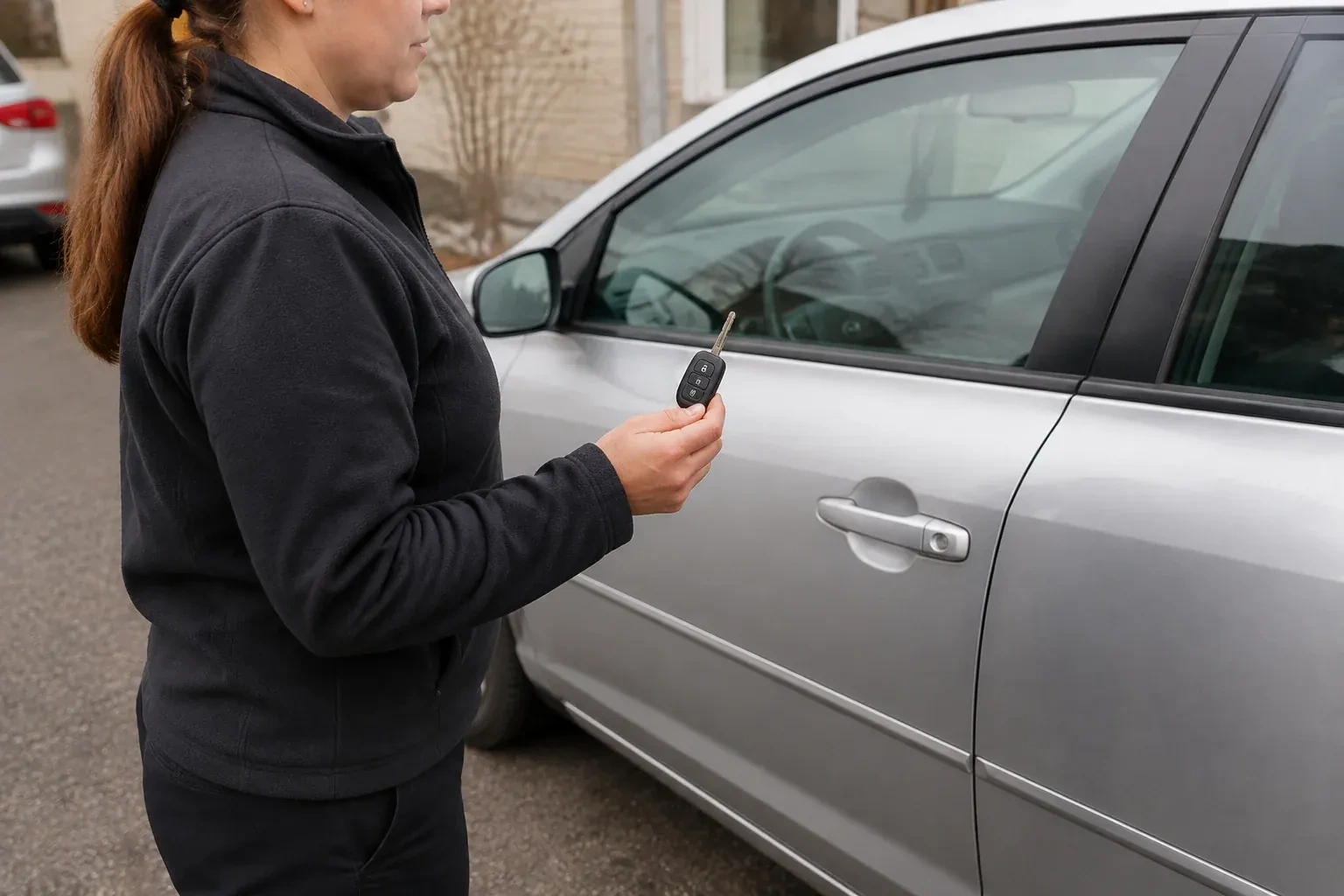
You pressed the fob at the office door and nothing happened. Pressed again, held it, walked closer.
Call now · open 24/7(249) 486-8066In plain words
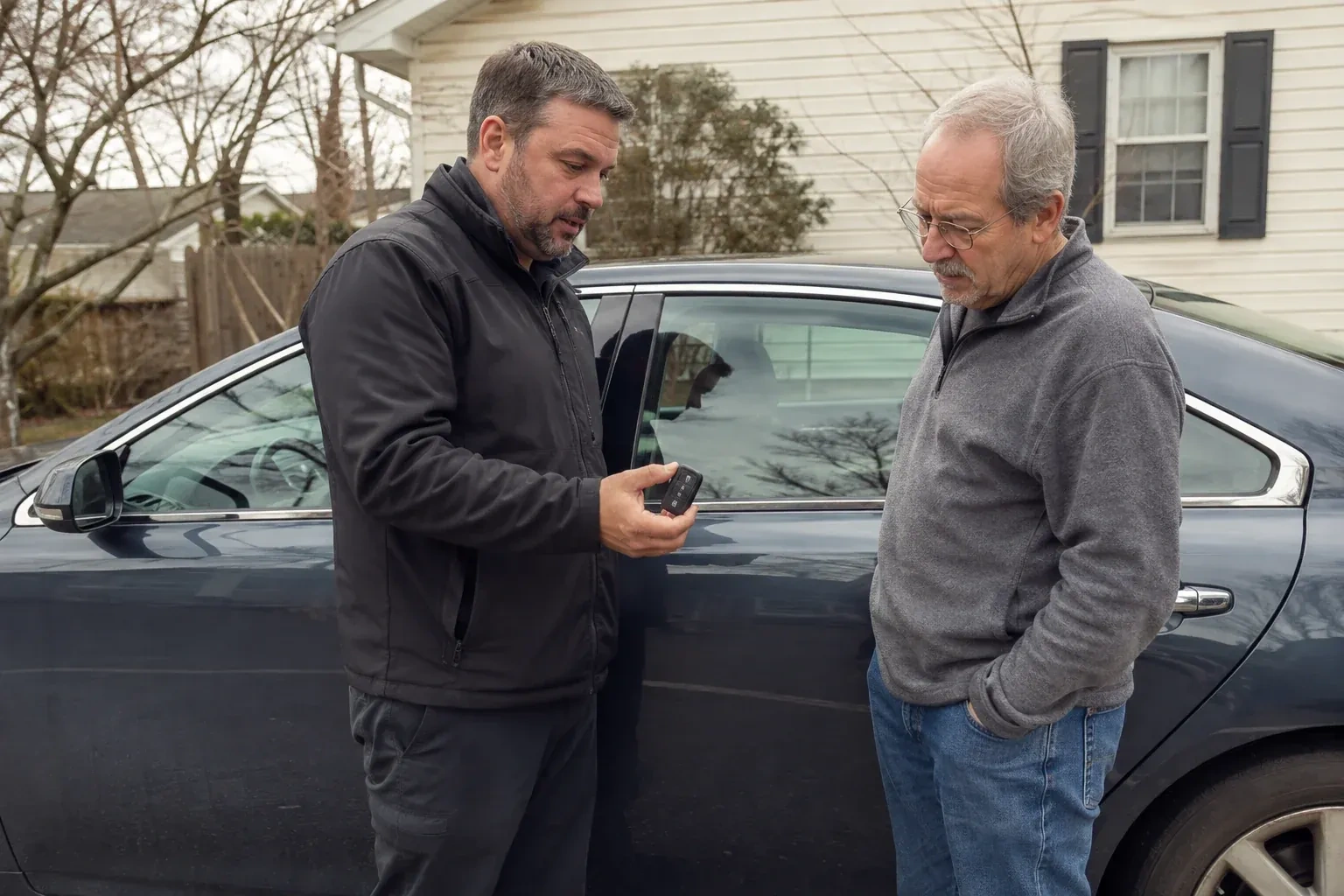
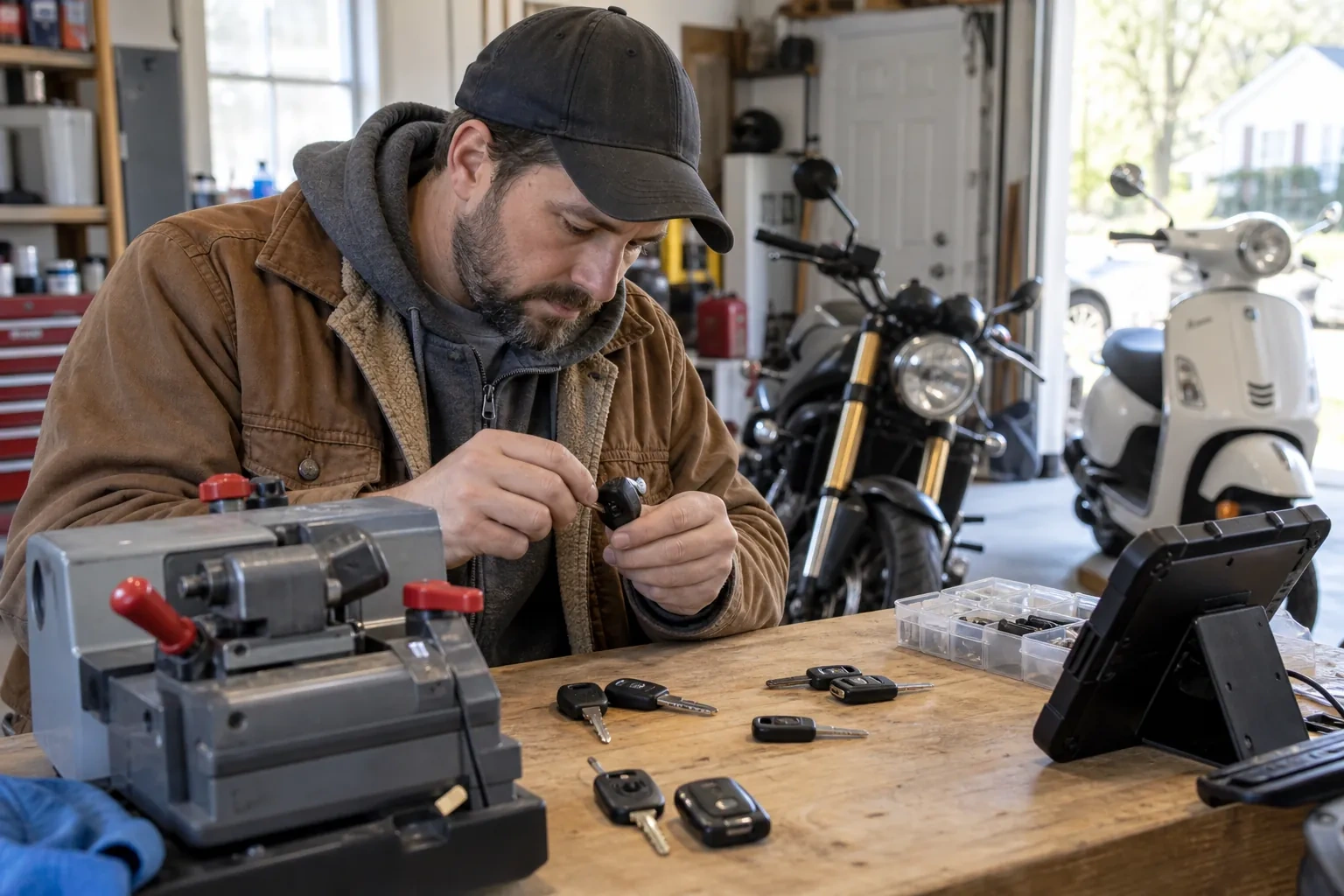
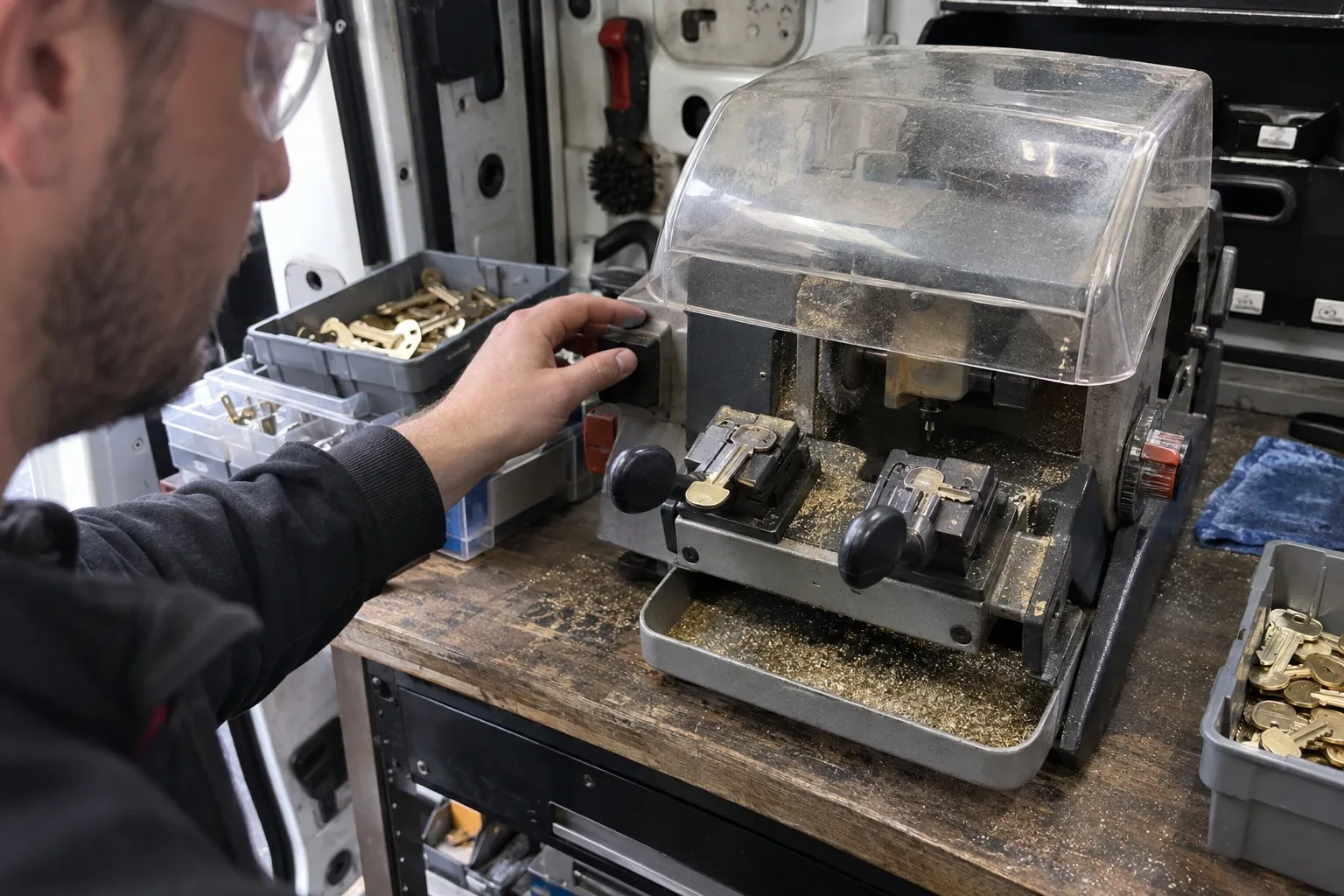
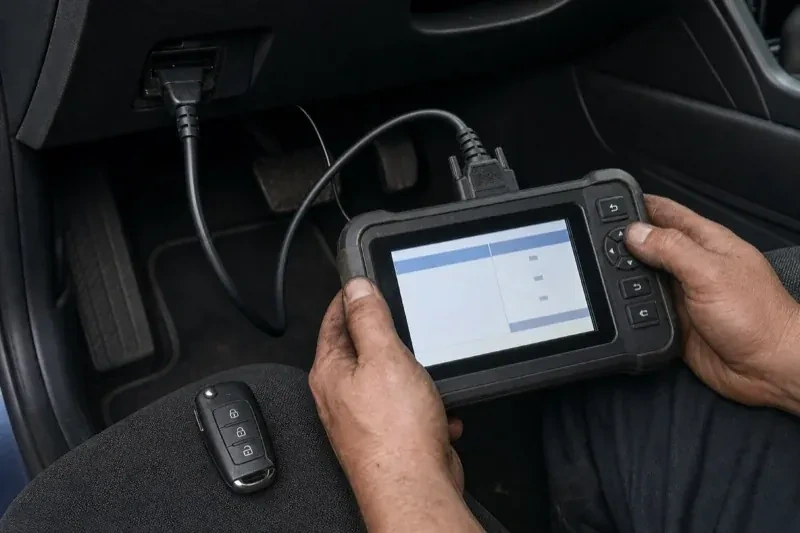
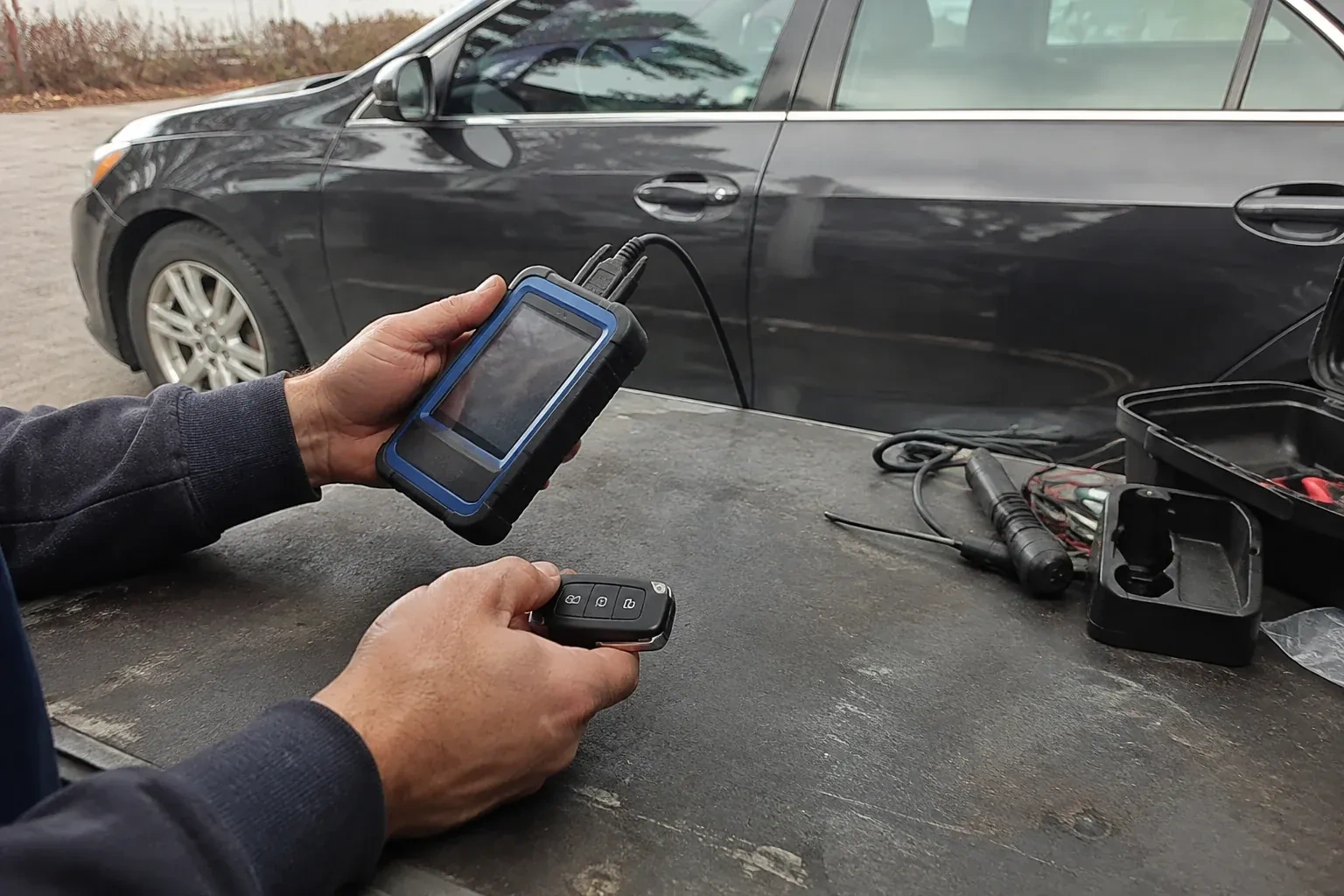
When the keys are truly gone, a car lockout call becomes two jobs in one visit. The first is entry, done without marking the car. The second is a key that works. The locksmith decodes the door cylinder or reads the key code from the vehicle's records with your proof of ownership, cuts a mechanical blade, then programs the transponder chip or fob where the vehicle's own security system supports it. On many vehicles the lost keys can also be erased from the car's memory. Many drivers leave on a key made at the roadside, though some vehicles need dealer credentials or parts and a tow instead.
How the visit goesYou stepped out at the pump to pay inside, the passenger locked their door out of habit, and the driver's door caught behind you. The engine is off, the keys are in the ignition, and the line of cars behind you is growing.
Car Lockout Service · Collingwood
How the visit goes
- 1
Where the car is sitting
A car in a driveway, a lit parking lot, an underground garage or on the shoulder of a four-hundred-series highway each ask for a different approach. On a highway the locksmith parks to shield the work, keeps hazard lights on and works from the side away from traffic, the same routine the provincial driver's handbook gives stranded drivers. In a tight garage the question is clearance to open the door and light to see inside the cabin. In a private lot or a building with gated access, someone may need to let the van in. Telling the locksmith exactly where the car is, and how to reach it, saves the first ten minutes on site.
- 2
Working the door cylinder
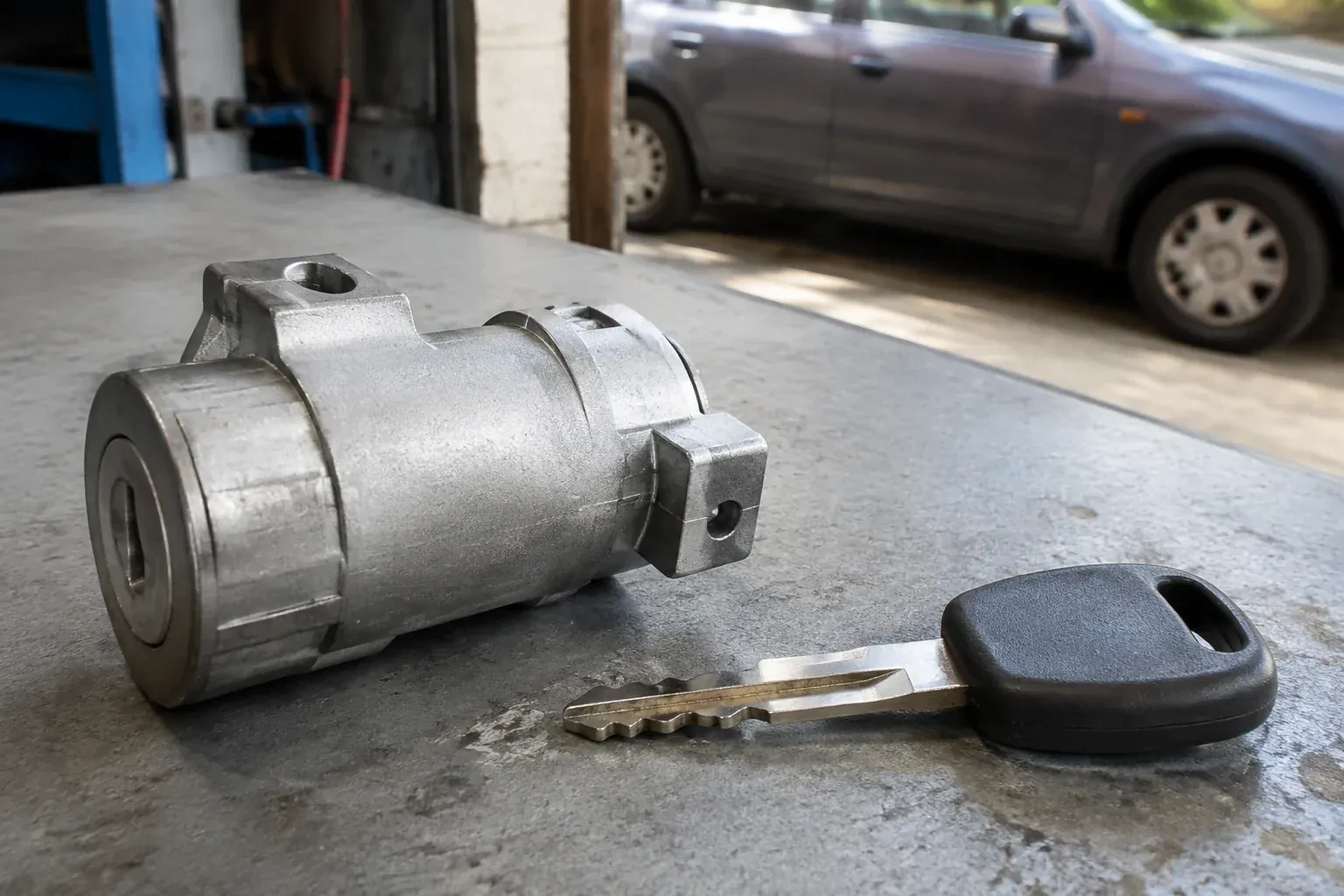
Where the car keeps a keyed driver's-door cylinder, exposed or under a small cap that pops off with a fingernail or a plastic pry, the locksmith can open the lock without going through the gap at all. A two-in-one pick and decoder built for that keyway sets each wafer to its shear line under light turning pressure, and the cylinder rotates and unlocks the door. As it does, the tool reads the depths of the wafers it can reach; a door cylinder sometimes exposes only part of the cut pattern, so the reading is completed against the vehicle's key code or another lock where needed. The cylinder is left clean and lubricated with whatever product the vehicle maker specifies.
- 3
Every door and the trunk, working as before
The visit closes with a full circuit of the car. The mechanical key is tested in whichever exterior cylinder or cylinders the car actually has, the fob and interior switch are tested across every door, the trunk is opened and latched, and the door that was worked on is closed and reopened so you can hear it seat normally. The window is checked for a true fit in its channel and the seal is run with a finger for any lift. Any handle cap that came off is snapped back and the cylinder is wiped down. You watch the last lock-and-unlock yourself, so there is no doubt that the car is exactly as you left it, only open.
In the van
- Padded long-reach tool
- Broken key extractors
- Transponder key blanks
- Key programmer
- Fob coin batteries
What affects the quote
- 1
Aftermarket alarm or immobiliser
A car with an added alarm or a second immobiliser may need its own reset or bypass procedure once the door is open, and that extra step is priced as its own line.
- 2
Dead fob or dead car battery
Replacing a fob coin cell is a small item. Jump-starting a flat twelve-volt battery so the immobiliser wakes is another, and each is named on the quote rather than folded in.
- 3
Trunk-only or full cabin lockout
Keys in the trunk usually mean a cabin opening followed by an interior release. A car with a valet-isolated trunk means decoding the trunk cylinder as well, which is a longer job.
Same fees day, night or weekend.
Car Lockout Service: questions
My keys are in the trunk. Do you have to open the trunk lock?
Almost never. Where the cabin has a usable path, it is opened first and the trunk released from inside using the release lever or the fold-down rear seat; the glowing emergency handle is mounted inside the trunk itself for a trapped occupant, and some vehicles have no cabin release at all. The lid is never forced. If the car has a valet setting that isolates the trunk, the trunk cylinder is decoded and turned like a door cylinder, again without marks.
My child is locked in the car. What should I do first?
Call 911 before you call anyone else. A vehicle interior can climb past 50°C in about twenty minutes on a mild day, and a cracked window does little, so responders treat a child in a closed car as an emergency and are equipped to get in at once. Then call the locksmith, who will come as backup and can also make sure the car is secured and working afterwards. In winter cold the same rule applies.
The key broke off in the door lock. Is that still a lockout call?
Yes, with one extra step. The broken piece is drawn out with extraction tools that grip it and pull straight, never pushed deeper, and then the door is opened normally. The cylinder is checked for worn wafers or salt and cleaned or lubricated, and the key itself is inspected too, since bending, wear or fatigue can snap a key even in a healthy cylinder. A new blade is cut from the two halves or from the code, because a worn copy would break again.
Car Keys
Bigger photo, sooner job: Emergency Book soon Plan ahead
Simcoe, Ontario
Collingwood information
- Town
- Collingwood, Simcoe, Ontario
- In business
- 25 years
- Hours
- Open 24/7 · nights, weekends and holidays, same fees
- Phone
- (249) 486-8066
- Visits
- On-site assessment preferred. Request a visit or call.
What the census means at the door
40%
Homes of every age. About 40% of homes in Collingwood were built in 1980 or earlier, according to the 2021 Census.
Older frames and newer frames fail in different ways. Settled wood pulls strikes out of line; new framing settles as it dries. A locksmith used to a mixed area recognises which he is looking at and adjusts accordingly.
56%
A mix of homes. Single-detached houses make up about 56% of homes in Collingwood (2021 Census).
In an area with both houses and attached homes, the work varies by the door. A detached house wants all its exterior doors on one key; a suite door wants a cylinder that suits a metal frame and respects building rules. A locksmith carries parts for both.
Nearby
Open 24/7
Request a visit
You pressed the fob at the office door and nothing happened.
Call now · open 24/7(249) 486-8066- On-site assessment preferred
- Same fees day, night or weekend
- 25 years in business