Emergency Lockouts · Tiny
Broken Key Extraction in Tiny
The padlock on the shed has been stiff all summer. Today the key twisted, cracked at the tip, and left the end buried deep in the keyway.
Call now · open 24/7(249) 486-8066In plain words
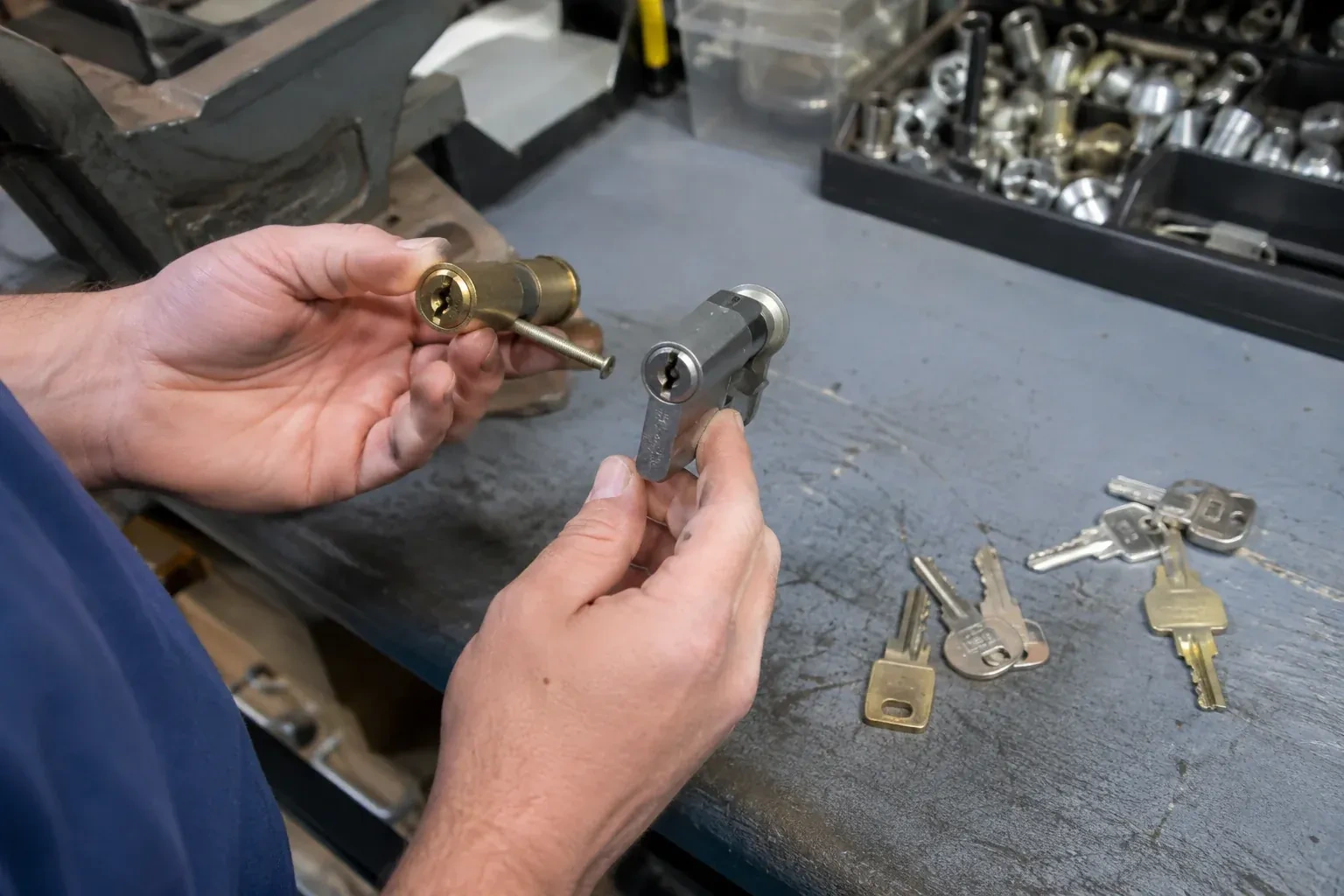
Broken key extraction is the removal of a snapped key piece from a lock so it can go back to work. It is done with slim hooks and spiral extractors that slide into the keyway beside the fragment, catch the cuts in the blade and draw it out the way it went in. First, the locksmith confirms you are entitled to the door or vehicle. Once the piece is out, the cylinder is inspected and cleaned, since a healthy lock does not rule out a key that was already worn, bent or fatigued, and a fresh key is cut so you are not relying on the copy that failed.
How the visit goesIn the parking lot your car key snapped in the driver's door. You are holding the plastic head with the buttons on it, the metal blade is inside the lock, and the spare is on a hook at home.
Broken Key Extraction · Tiny
How the visit goes
- 1
What happened in the second before it broke
Your account of the break is evidence. A key that snapped while you were turning against resistance points to ice, a binding bolt or a swollen door. One that broke as you pushed it in suggests grit or a damaged pin in the keyway. A key that had been sticking for weeks and finally gave up hints at worn pins or a loose cylinder cap. A key that simply cracked at a deep cut with no drama was probably fatigued metal. Each story leads to a different check after the piece is out, so a few honest sentences about the moment save guesswork later.
- 2
Cutting the key you leave with
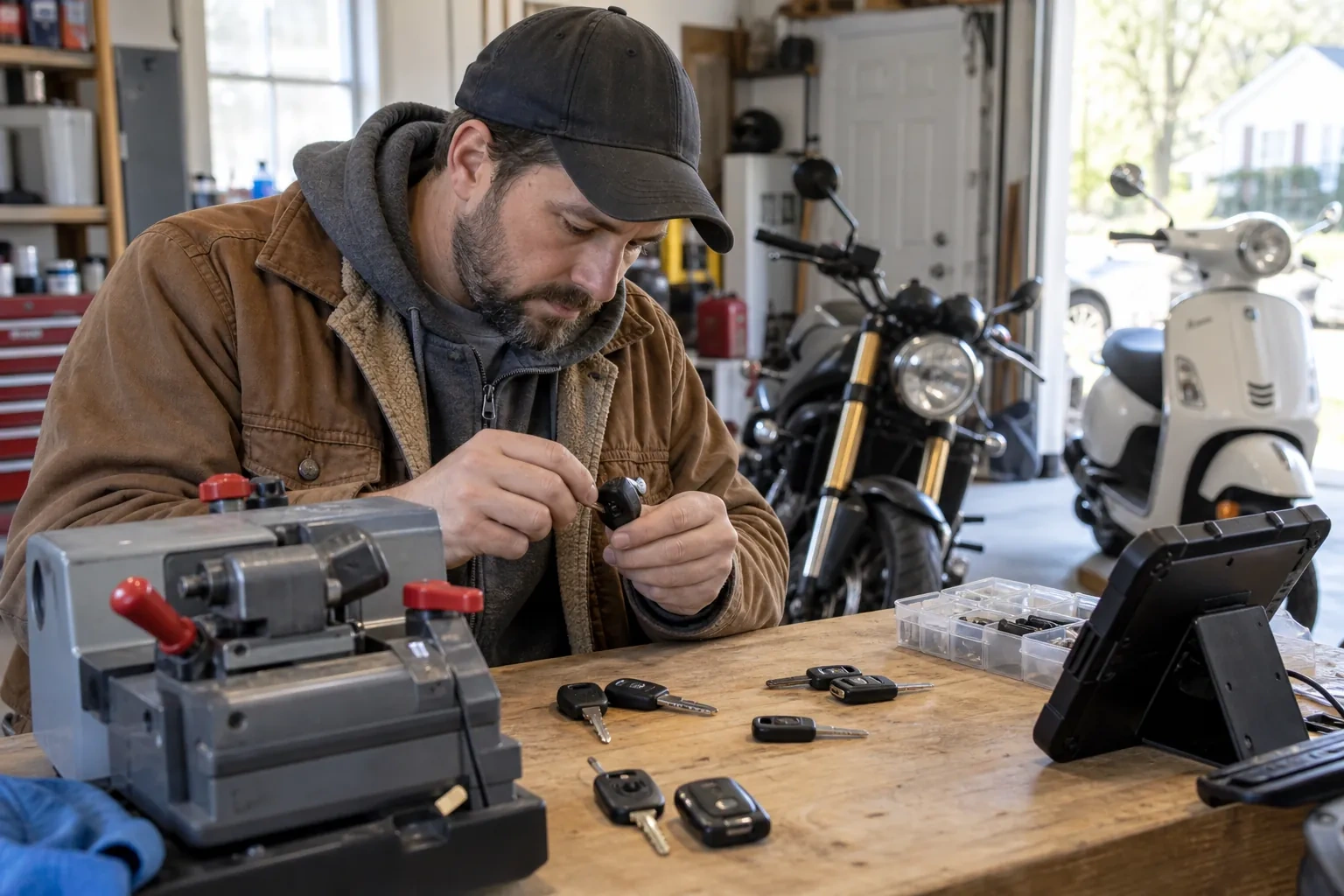
Once the lock is clear, a replacement key is made. The two halves of the broken key are laid together and the cuts are read with a key gauge, or the locksmith cuts from the key code if you have the tag or the lock's records, or from a crisp spare. What is avoided is copying a worn original, because a duplicate inherits every rounded cut and will stick and wear the same way. The new key is cut on a code machine, tried in the lock with the door open, then closed, and from both sides. Extra copies are cut from the new key while the machine is set.
- 3
Habits for the freezing months
A winter break leaves you with a dried, lubricated cylinder and one rule: when the key stops partway, you stop too. Carry a small lock de-icer in a coat pocket or the glovebox; a few seconds of it, or the warmth of a cupped hand on the cylinder, frees a frozen plug without asking anything of the blade. Shut the storm door before freezing rain, and fit a keyhole cover on a side door that catches meltwater during a thaw. Ice is one of the winter causes the locksmith sees often, alongside worn keys, misalignment and dirty or worn cylinders, and it is one of the easiest to prevent.
In the van
- Spiral key extractors
- Vehicle key blades and chip shells
- Manufacturer-approved cylinder lubricant
- Replacement cylinder or deadbolt
- Hook key extractors
What affects the quote
- 1
Rekeying other doors to match
If the cylinder ends up rekeyed or replaced, matching the other exterior locks to the new key is priced per cylinder, and simplest while the locksmith is already there.
- 2
How the new key is made
Cutting from a key code or a crisp spare, decoding the two halves with a gauge, or cutting a restricted blank from system records each take different time and stock.
- 3
Condition of the cylinder
Worn pins, a loose cap, grit or corrosion found after the piece is out may call for a service, a rekey or a new cylinder, each explained and quoted separately.
Same fees day, night or weekend.
Broken Key Extraction: questions
Why did my key break at all?
Often fatigue, though not the only cause. A brass blade is weakest where the deepest cut leaves the least metal, and thousands of turns can slowly work a crack into that spot. Then one morning something asks more of it: a frozen cylinder, a bolt binding in a swollen door, grit in the keyway, or turning before the key was fully in. A bent, worn or poorly cut key can also fail on its own, with no such trigger. The lock is inspected afterwards to find which applied.
Part of the key is sticking out. Can I just pull it with pliers?
If a good length shows and the plug is at its normal rest position, a firm straight pull sometimes works. The risk is pushing instead of pulling, or twisting, which drives the piece deeper and can bend a pin. If it does not come on the first gentle try, stop there and leave it for extractor tools, which grip the cuts without loading the cylinder.
What proof do I need to show?
Photo identification and something that connects you to the lock. For a house or apartment that is a lease, a bill, addressed post, or confirmation from the property manager; for a business, your role there; for a vehicle, the registration or ownership papers with matching identification. If the documents are inside, say so on the phone and the check is completed once the door is open.
Lockout Services
 EmergencyHome Lockout ServiceYou reached the front step with the groceries, patted every pocket twice, and the house key is simply not there.
 EmergencyBusiness Lockout ServiceMinus eighteen with a wind, and the exterior cylinder on the shop door has frozen solid overnight after yesterday's slush.
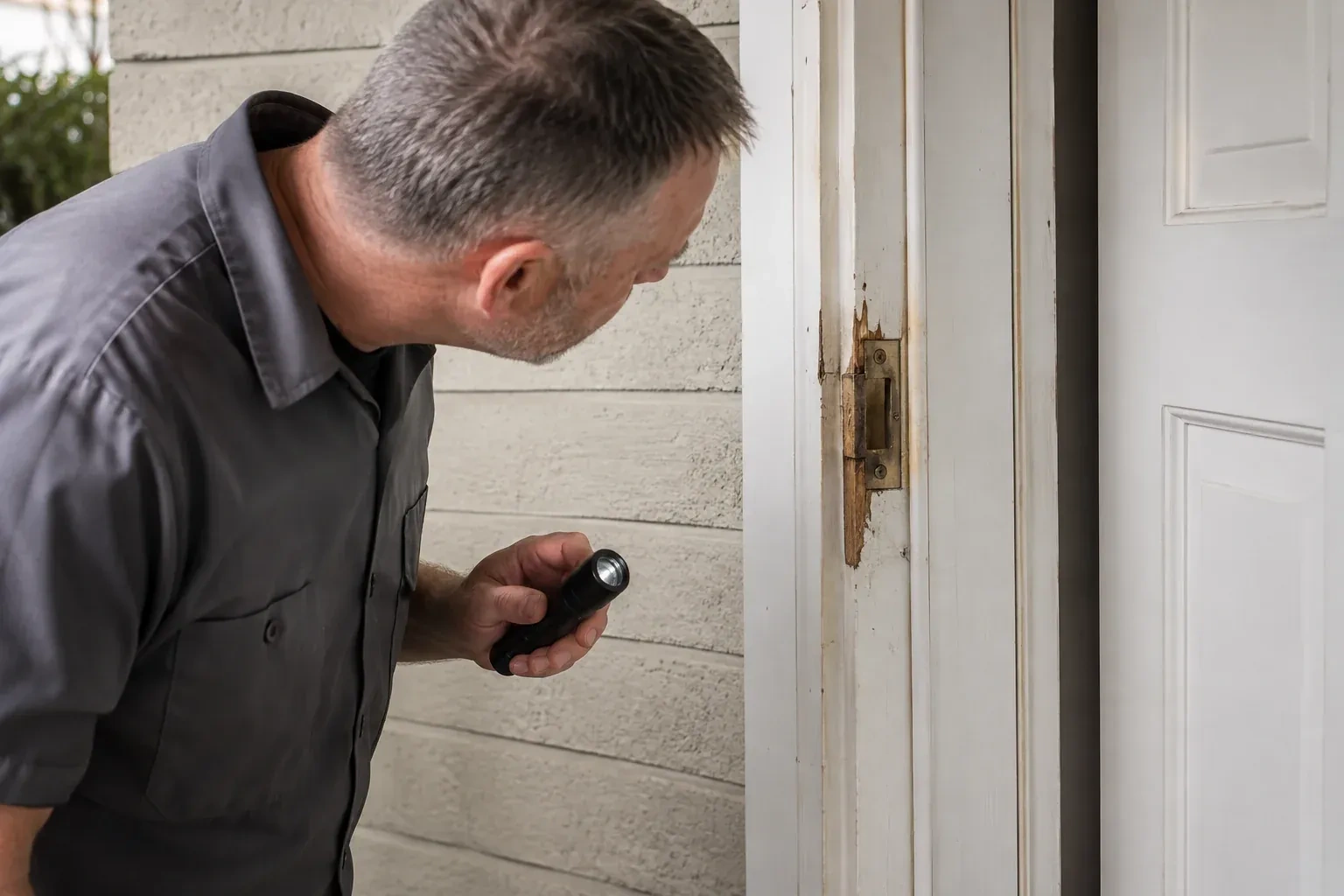 EmergencyBreak-In Damage Lock RepairSomeone smashed the little window beside the door, reached in and turned the thumb-turn.
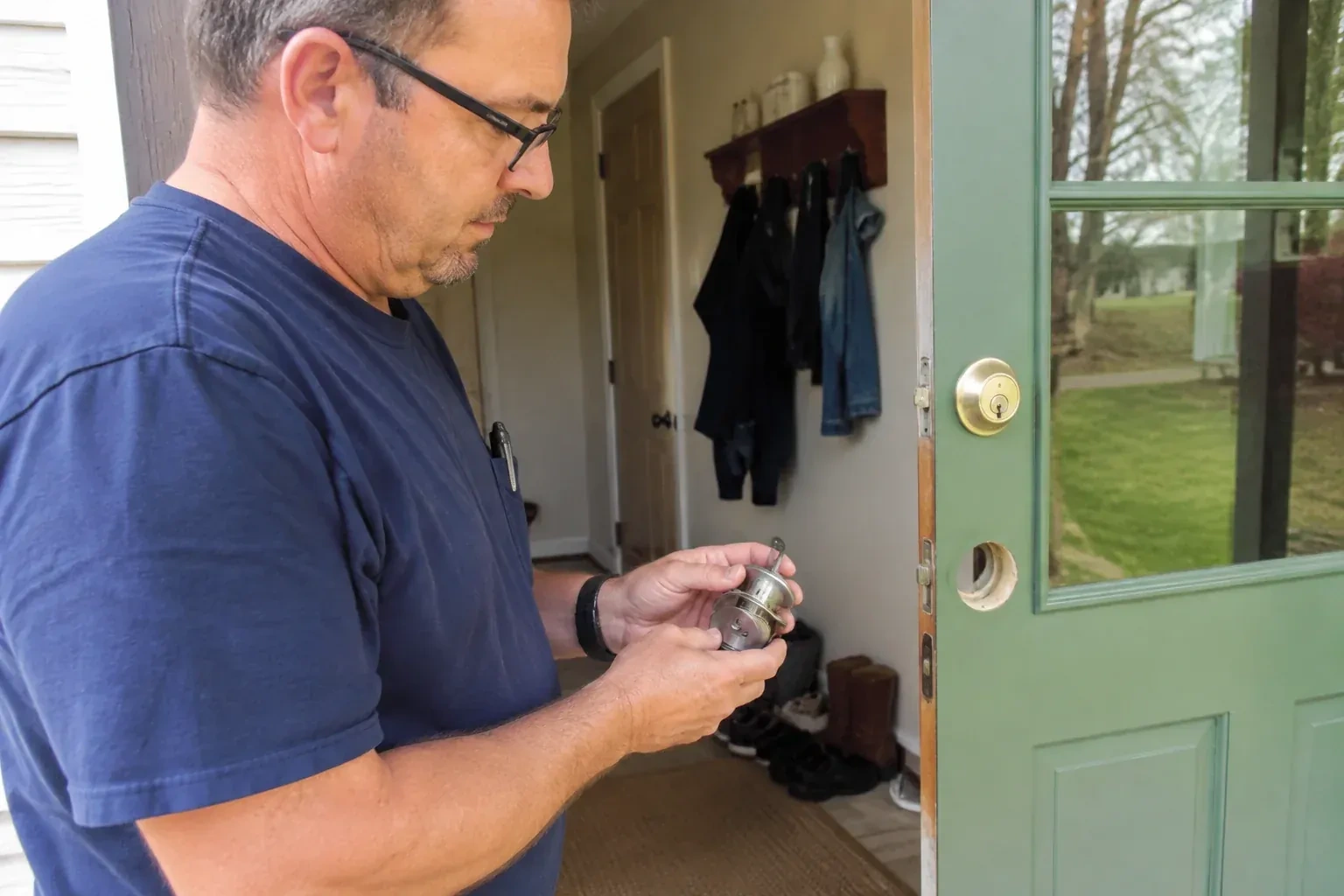 EmergencySeized & Jammed Lock OpeningThe key slides all the way in, exactly as it has for years, and then refuses to turn in either direction.
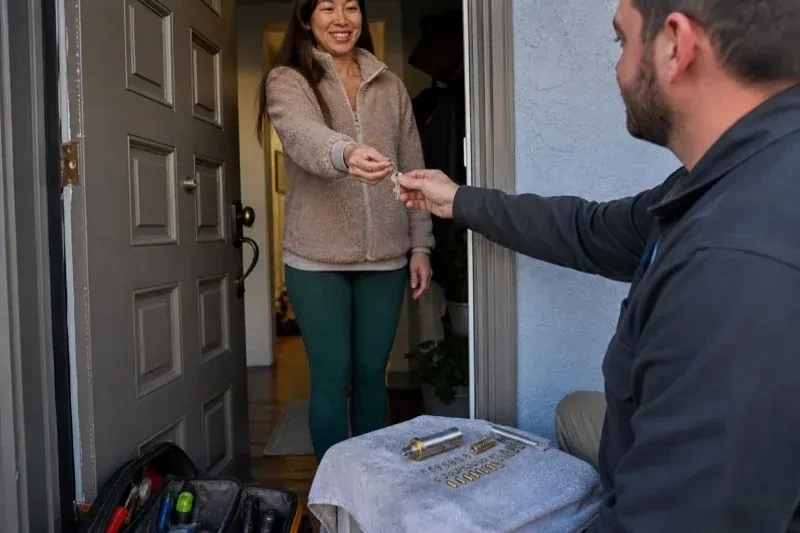 EmergencyLost Keys — Same-Visit RekeyYou let a part-time employee go on Friday.
Simcoe, Ontario
Tiny information
- Town
- Tiny, Simcoe, Ontario
- In business
- 25 years
- Hours
- Open 24/7 · nights, weekends and holidays, same fees
- Phone
- (249) 486-8066
- Visits
- On-site assessment preferred. Request a visit or call.
What the census means at the door
47%
Homes of every age. About 47% of homes in Tiny were built in 1980 or earlier, according to the 2021 Census.
In neighbourhoods with a mix of older and newer homes, the finishes on the doors vary widely: aged brass, satin nickel, matte black. A locksmith serving such an area keeps a range of finishes so replacement hardware suits each house.
97%
Mostly houses. Single-detached houses make up about 97% of homes in Tiny (2021 Census).
In areas of single houses, the door nobody watches is the side or back entry. It often has the weakest lock on the property. Fitting a proper deadbolt and a reinforced strike there is a modest job that closes the obvious gap.
Nearby
Open 24/7
Request a visit
The padlock on the shed has been stiff all summer.
Call now · open 24/7(249) 486-8066- On-site assessment preferred
- Same fees day, night or weekend
- 25 years in business